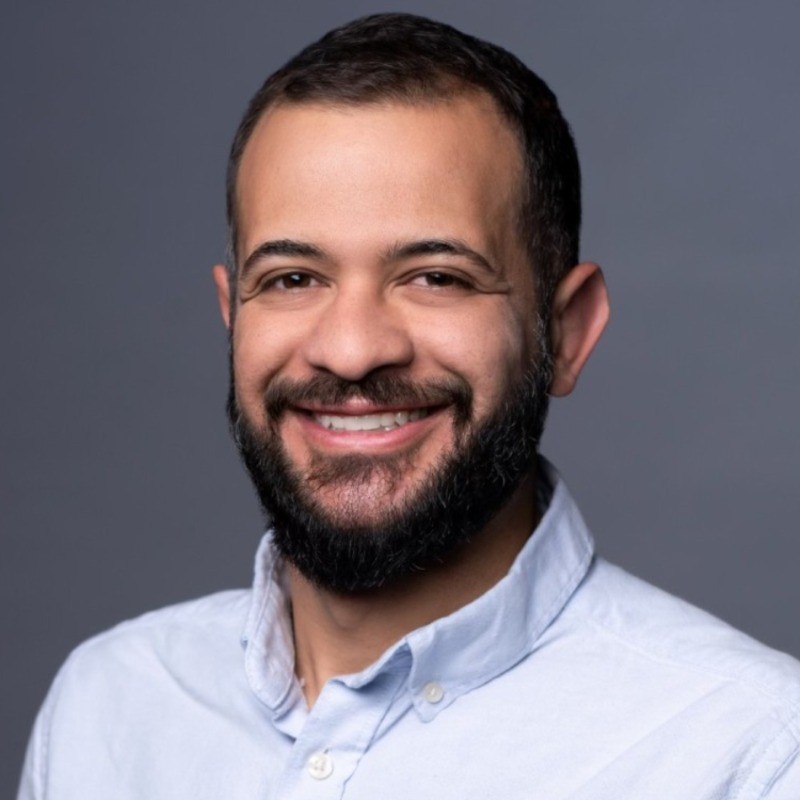
Biography
Moustafa is a Co-Founder & CTO at Disarray and a CS Researcher at UC Berkeley’s SkyLab. He previously served as a Technical Director at NASA Ames Research Center, where he received NASA’s Early Career Achievement Medal for pioneering secure, real-time AI/ML systems, significantly advancing NASA’s capabilities in space missions and mixed autonomy air traffic management. Prior to NASA, he was a postdoctoral researcher at UC Berkeley’s RISELab with David E. Culler.
Moustafa earned his Ph.D. from Rutgers (advised by Manish Parashar), where he was a three-time recipient of the IBM Ph.D. Fellowship, won the IEEE IPDPS Ph.D. Forum Award, and received the Rutgers ECE Academic Achievement Award. His research has also been recognized with the IEEE/ACM CCGrid Scale Challenge Award, the ACM UCC Cloud Challenge Award, and was featured in Fortune magazine.
Moustafa’s research investigates how autonomous systems can reliably orchestrate complex, heterogeneous components under incomplete information and dynamic conditions. This question has guided his work across four domains: high-performance computing, edge-native ML systems, mission-critical autonomous aviation, and compound AI systems for machine learning engineering.
Current Focus
Moustafa’s current research investigates compound AI systems for automating machine learning engineering, a problem that requires coordinating many interdependent steps under incomplete information, where relevant context is scattered across systems and iteration is expensive. It is the hardest instance of the autonomous orchestration problem, and it carries a distinctive recursive property: a system that can autonomously build ML models has the potential to improve the AI systems on which it is built, including, ultimately, its own components.
Rather than relying on improvements to the underlying language models alone, Moustafa investigates how compound architectures, e.g., semantic knowledge graphs, multi-agent orchestration, persistent memory, and domain-specific tooling, can make existing models dramatically more effective at ML engineering tasks. See Research for more details.
Looking ahead, Moustafa is interested in pushing compound AI systems toward broader scientific domains: autonomous AI for scientific discovery, where the orchestration challenges multiply and the impact of reliable autonomous operation extends beyond ML engineering to accelerating science itself. He is also interested in the theoretical foundations of self-improving systems: understanding under what conditions a compound AI system can reliably improve its own components, and what architectural constraints are necessary to make such improvement stable and verifiable.